
 how-to
How to Fix Lawn Drainage Problems: A Step-by-Step Guide
Table of Contents
- Diagnose the Source of Your Lawn Drainage Problem
- Standing Water in Yard Solutions: Quick Fixes That Work
- Lawn Aeration for Drainage: When and How to Aerate
- Grading Yard to Improve Drainage: Filling Low Spots and Building Slope
- French Drain for Yard Drainage: When It Is Worth Installing
- Downspouts, Swales, and Rain Gardens: Managing Roof Runoff and Surface Water
- Improving Soil Drainage with Organic Matter and Soil Amendments
- Common Mistakes to Avoid When Fixing Lawn Drainage Problems
- Frequently Asked Questions
Last Updated: October 16, 2026
Diagnose the Source of Your Lawn Drainage Problem
Standing water after a storm usually traces back to one of four causes: compacted soil, a yard that slopes toward the house, clogged or short roof runoff, or a high water table.
This guide from BV Dub Outdoor Solutions walks through how to fix lawn drainage problems step by step, starting with diagnosis. We work on yards across LaGrange, Woodland, Columbus, and Newnan.
So let's start where every fix should start: matching the symptom to the cause before you buy a shovel, a pipe, or a truckload of topsoil.
How to Tell What Is Causing Poor Drainage in Your Lawn
Poor drainage in a lawn is water failing to move off the surface or through the soil within a few hours of rain. The cause is usually visible if you know where to look.
Run these checks:
- The hose test: Soak one spot for 30 minutes. If water still sits an hour later, your soil is compacted or heavy clay.
- The slope check: Lay a level on a board near the foundation. Water should flow away from the house, not toward it.
- The downspout check: Watch where roof runoff lands. If it dumps within a metre of the foundation, that's your culprit.
Most yards have two problems stacked on top of each other. That's why single fixes often fail.
The Diagnosis Decision Tree: Match the Symptom to the Fix
Use this table to go from what you see to what you should actually do. Read the symptom, confirm the cause with the checks above, then follow the fix column, not the other way around.
| What you see | Most likely cause | Confirm it with | Fix to start with |
|---|---|---|---|
| Water pools in one bowl-shaped spot, rest of yard is dry | Low spot / poor surface grading | Low spot map after rain | Fill and regrade the low area |
| Water soaks in slowly everywhere, lawn feels hard | Compacted soil or heavy clay | Hose test | Core aeration plus organic matter |
| Water runs toward the house or pools against the foundation | Yard slopes toward the structure | Slope check with a level | Regrade to a 2% slope away from the house |
| Water pools directly under a downspout outlet | Roof runoff concentrated in one spot | Downspout check | Extend the downspout 1.5-3 m |
| Water seeps up from below even in dry weather, or the whole yard stays soggy for days | High water table | Watch a post-rain dry spell; water returns without rain | Subsurface drainage or a dry well, often a pro job |
| Water pools in the same spot after every storm despite aeration and regrading | No natural downhill outlet | Trace where water could go | French drain to a safe outlet |
Why the Order Matters
Work the fixes from cheapest and least invasive to most. A downspout extension costs a fraction of a French drain, and it solves the problem in a large share of yards we see.
If you install a French drain before checking your roof runoff, you may be piping water away from a spot that wouldn't have pooled in the first place.
Standing Water in Yard Solutions: Quick Fixes That Work
The fastest fix for standing water in yard solutions is redirecting the water before it pools. Start with the cheapest options and work up.
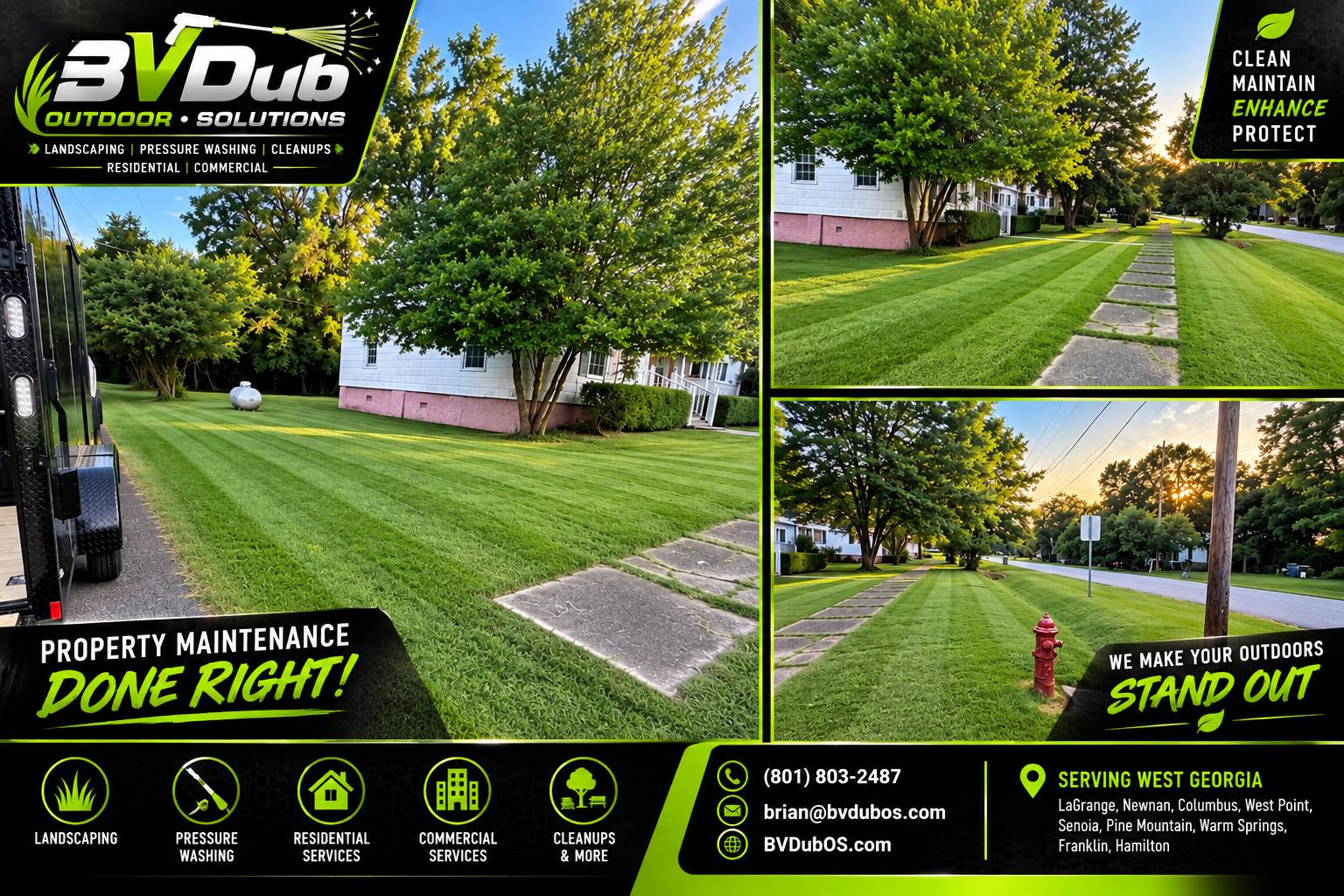
Four quick fixes that solve most minor pooling:
- Extend downspouts at least 1.5 metres from the foundation.
- Rake and fill shallow low spots with topsoil, then compact lightly.
- Aerate the wet area to open channels for water to soak in.
- Add a gravel-filled trench along the wettest edge to channel water away.
These cost little and take an afternoon. If water still sits after a heavy storm, you need one of the bigger fixes below.
Lawn Aeration for Drainage: When and How to Aerate
Lawn aeration for drainage works when compaction is the problem, not when the yard simply slopes the wrong way. Aerating a sloped yard won't stop water from running downhill.
Aerate when:
- The soil is compacted from foot traffic or heavy clay
- Water soaks in slowly even without a slope issue
- The lawn feels hard and spongy in patches
Core aeration pulls small plugs of soil out, which opens space for air and water. Do it in early fall or spring when the grass is actively growing.
For heavy clay, aerate twice a year for the first two years. Then drop to once a year.
Grading Yard to Improve Drainage: Filling Low Spots and Building Slope
Grading yard to improve drainage means reshaping the surface so water flows away from the house and toward a safe outlet. The target slope is roughly 2% away from the foundation, which is about 2 centimetres of drop per metre.
Here's how to regrade:
- Mark the high and low points with stakes and string.
- Add topsoil in thin layers, no more than 5 centimetres at a time.
- Tamp each layer down so it doesn't settle later.
Never build soil up against the siding or foundation. Leave at least 15 centimetres of foundation visible. If the low spot is large or sits close to the house, this is a job for a pro with a laser level.
French Drain for Yard Drainage: When It Is Worth Installing
A French drain for yard drainage is worth installing when water collects in a specific low area and won't drain after aeration, regrading, and downspout fixes.
Install one when:
- Water pools in the same spot after every storm
- The yard has no natural downhill path for water to follow
- You've already tried the cheaper fixes
A French drain needs a downhill outlet. If your yard is flat, the pipe must run to a dry well or a storm drain. Digging near utilities without checking first is dangerous. Call 811 before you dig, and check local rules.
Downspouts, Swales, and Rain Gardens: Managing Roof Runoff and Surface Water
Roof runoff is the most overlooked cause of lawn drainage problems. A single downspout can dump hundreds of litres of water onto one spot during a storm.
Three ways to manage it:
- Downspout extensions: Cheap, fast, and effective. Run them 1.5 to 3 metres from the foundation.
- Drainage swales: A shallow, grassy channel that carries surface water to a lower point. Swales work well on sloped yards.
- Rain gardens: A planted depression that soaks up runoff. Good for flat yards with clay soil.
A dry creek bed with gravel and stepping stones can double as a swale and a landscape feature. It handles water and looks intentional.
Improving Soil Drainage with Organic Matter and Soil Amendments
The fix is building soil structure, not just adding a drain. But before you spread anything, confirm that soil is actually your problem, and identify what kind of soil you have.
Test Your Soil Before You Amend It
Two simple tests tell you whether amendments will help and how much you need.
The percolation (perc) test. Dig a hole about 30 cm deep and 15 cm wide. Fill it with water and let it drain completely, this saturates the surrounding soil. Refill the hole and time how long the water level drops:
- Under 2.5 cm per hour: Poor drainage. Heavy clay or compaction. Amendments and aeration will help.
- 2.5-12 cm per hour: Adequate drainage. If you still have pooling, the problem is grading or runoff, not soil.
- Over 12 cm per hour: Fast-draining soil. Water leaves too quickly to soak in, the issue is likely surface flow, not absorption.
The ribbon test. Roll a moist ball of soil between your palms into a ribbon. A ribbon that holds past 5 cm means high clay content.
If your perc test comes back adequate but water still pools, stop amending and go back to the diagnosis table, you're treating the wrong problem.
What to Add, How Much, and When
| Amendment | What it does | Application rate | Notes |
|---|---|---|---|
| Compost | Opens pore space, feeds soil biology | 5-8 cm worked into the top 15 cm | Best all-around fix for clay |
| Aged manure | Similar to compost, higher nutrient load | 2.5-5 cm | Let it age; fresh manure burns grass |
| Topsoil | Builds up low spots, blends grades | Thin layers, 5 cm at a time | Use for grading, not for fixing clay structure |
| Gypsum | Can help break up tight clay over time | Follow product label | Results vary by soil chemistry; not a quick fix |
| Sand | Adds pore space in sandy soils | , | Do not add to clay, see warning below |
Organic matter opens pore space, which lets water move through the soil instead of sitting on top. It takes a season or two to see full results. Combine it with core aeration for faster improvement, the aeration holes give water and compost a path into the root zone instead of letting them sit on the surface.
Timing and Realistic Expectations
Apply compost in early fall or spring when grass is actively growing, the same window you'd aerate. Work it into the top 15 cm with a rake or a core aerator followed by a compost topdressing.
If your perc test shows poor drainage and your soil ribbons past 5 cm, amendments are the right first move. If the perc test is fine, save the compost and fix the grading or runoff instead.
Common Mistakes to Avoid When Fixing Lawn Drainage Problems
The biggest mistake is fixing the symptom instead of the source. Here's what to avoid:
- Installing a French drain without checking where the water will go
- Aerating a yard that actually needs regrading
- Building soil up against the foundation
Each of these wastes money and delays the real fix. Diagnose first, then spend.
If the work is bigger than a weekend project, or if water is threatening your foundation, bring in a pro. BV Dub Outdoor Solutions handles drainage, grading, lawn care, and yard repair across LaGrange, Woodland, Columbus, and Newnan. We diagnose the source, fix it right, and follow up so you're not chasing us for answers.
Frequently Asked Questions
What will soak up standing water in the yard?
Plants that drink heavily and tolerate wet roots work best: rain garden species like swamp milkweed, Joe Pye weed, and sedges. A rain garden or dry creek bed filled with gravel and planted with these species absorbs and channels standing water. For faster results, combine plantings with a French drain or drainage swale to move water away from the wettest spot. Fixing the underlying cause, whether that is compacted soil or a grading issue, matters more than any single plant.
Will aerating a lawn help with drainage?
Aeration helps when compaction is the problem. Core aeration pulls small plugs of soil out, opening channels that let water and air reach the root zone. On heavily compacted clay soil, one pass rarely solves it; plan on aerating once in early fall and again in spring, then topdress with compost so the holes fill with organic matter. If water still pools after two seasons of aeration, the issue is likely grading or a missing drainage outlet, not compaction alone.
When should I install a French drain or dry well?
Install a French drain when water collects in a specific strip of the yard and has nowhere to go, especially near a foundation, retaining wall, or driveway. A dry well works when you have one isolated low spot and no downhill outlet. Before digging, call 811 to mark utilities. If the water source is roof runoff, extend downspouts first; a French drain will not keep up with a downspout that dumps directly onto the lawn.
How do I know if I need professional help for lawn drainage problems?
Call a professional when water reaches your foundation, when the yard slopes toward the house, when you have tried aeration, downspout extensions, and regrading without results, or when the fix requires trenching near utilities or a septic system. A pro can run a percolation test, check the slope with a level, and design a drainage system with a safe discharge point. In the LaGrange and Woodland area, BV Dub Outdoor Solutions handles drainage assessments and installation as part of full yard care.
Water that sits against your foundation for years can cause real damage, and DIY fixes often miss the source. BV Dub Outdoor Solutions diagnoses the cause first, then fixes it with grading, aeration, drainage installation, and soil improvement tailored to your yard. If you want a lawn that drains right and stays that way, get a quote from BV Dub Outdoor Solutions and let our team handle the work.