
 how-to
How Often Should You Mow Your Lawn? A 2026 Guide
Table of Contents
- How Often Should You Mow Your Lawn? The Short Answer
- How Often to Mow Lawn in Summer
- Your Lawn Mowing Schedule by Season
- The One-Third Rule for Mowing: Why It Protects Your Grass
- Adjusting Your Mowing Schedule for Weather and Grass Type
- Mowing Frequency for Newly Seeded or Sodded Lawns
- Benefits of Professional Lawn Mowing
- Conclusion
- Frequently Asked Questions
Last Updated: October 9, 2026
How Often Should You Mow Your Lawn? The Short Answer
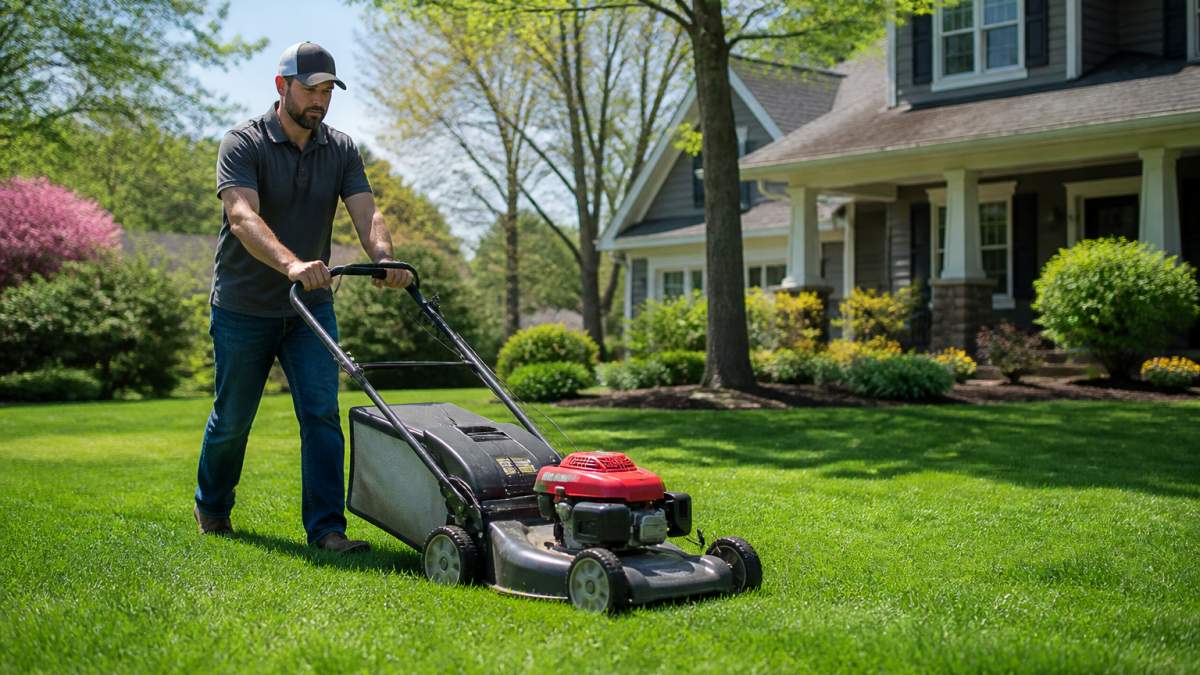
The short answer: mow your lawn once a week during active growth. When grass is growing fast in late spring, you may need to mow your lawn every five days or so.
That weekly rhythm is not a rule handed down from above. It is a simple match between how fast grass grows and how much you cut off at once.
Homeowners who mow on a fixed weekly schedule often get a thicker, greener lawn. Those who wait until the grass looks shaggy can end up fighting weeds and brown patches all season.
Why Growth Rate Matters More Than the Calendar
Your calendar tells you the date. Your grass tells you when it needs cutting.
Grass growth is a lawn care signal, not a date on a wall. Growth speed depends on three things:
- Soil temperature
- Water
- Daylight hours
When all three line up in spring, grass can grow several centimetres a week. In a Georgia summer drought, growth nearly stops. Same lawn, same mower, very different needs.
How Often to Mow Lawn in Summer
Mow every 5 to 7 days in early summer, then move to every 7 to 10 days as heat builds. Summer is when most lawns in Georgia either thrive or fall apart, and mowing frequency is a big reason why.
Heat stress changes the math. When temperatures climb and rainfall drops, cool-season grasses slow down. Warm-season grasses like Bermuda and Zoysia keep pushing growth as long as they get water. So the right summer schedule depends on what is growing in your yard.
A common mistake is cutting too short in summer to stretch the time between mows. That backfires. Short grass has less leaf area to shade the soil, so it dries out faster and invites weeds.
- Water deeply once or twice a week instead of lightly every day
- Raise your cutting height in peak heat
- Skip mowing during a drought until growth returns
Your Lawn Mowing Schedule by Season
A lawn mowing schedule by season beats any single rule. But the most reliable schedule isn't a calendar, it's a decision tool based on how fast your grass is actually growing. Use the seasonal table below as a baseline, then apply the growth-based checklist to fine-tune each mowing.
Seasonal Baseline for a Typical Lawn
| Season | Mowing Frequency | Typical Grass Height | What to Watch |
|---|---|---|---|
| Spring | Every 5 to 7 days | 6 to 8 cm | Fast growth after rain |
| Early summer | Every 5 to 7 days | 7 to 9 cm | Peak growing season |
| Late summer | Every 7 to 10 days | 8 to 10 cm | Heat and drought stress |
| Fall | Every 10 to 14 days | 6 to 8 cm | Slowing growth |
| Winter | As needed | 5 to 7 cm | Dormant grass |
This is a starting point, not a script. Your grass type, soil, and watering habits will shift these numbers. For a more precise schedule, use the growth-based decision tool below.
The Growth-Based Decision Tool: When to Mow Without Guesswork
Instead of relying on a fixed day, check three things before you mow:
- Current grass height. Measure a representative spot. If it's more than one-third taller than your target cutting height, it's time to mow.
- Recent growth rate. Has the grass grown noticeably in the last 3-4 days? If yes, you're in a fast-growth phase, mow sooner. If growth has stalled, wait.
- Target height for your species. Use the species table in the previous section to know your ideal cutting height. Never cut below that target.
A simple rule: If you can see a noticeable change in height since your last mow, and the grass is approaching one-third above your target, mow. If it's still short and growth is slow, wait.
This tool replaces the calendar with a direct read on your lawn. It works in any season, any climate, and for any grass type.
Spring: The First Cut and Fast Growth
Spring is the busiest mowing season. Once soil warms and rain arrives, grass growth takes off. This is when a fixed weekly schedule earns its keep, but don't be afraid to mow every 5 days if growth is explosive.
Start with a slightly lower cut to clear winter debris and wake up the lawn. Then raise the blade as growth speeds up. If you skip a week in spring, you'll likely cut off too much at once, and that stresses the grass.
Fall: Slowing Down Before Winter
Fall is a wind-down, not a stop. Growth slows, so you can stretch mowing to every 10 to 14 days. Keep cutting until the grass stops growing for the season.
Do not leave the lawn long going into winter. Tall grass mats down under snow and moisture, which invites disease. A final cut at a moderate height sets the lawn up for a healthier spring.
The One-Third Rule for Mowing: Why It Protects Your Grass
The one-third rule for mowing says never cut more than one-third of the grass blade height in a single pass. It is the single most useful rule in lawn care.
Here is why it works. Grass blades are the plant's food factory. Cut too much at once and you shock the plant. It spends energy regrowing instead of staying healthy. Follow the rule and the grass stays green, dense, and resilient.
A quick example:
- Grass is 9 cm tall
- One-third is 3 cm
- Cut down to 6 cm, no lower
If your grass is overgrown, do not try to fix it in one cut. Mow at the highest setting first, then lower it a few days later.
Adjusting Your Mowing Schedule for Weather and Grass Type
Weather and grass type decide your real schedule. Two lawns on the same street can need different mowing frequencies. To move beyond guesswork, use the decision guide below, it pairs common grass species with climate zones and gives you specific triggers for when to mow, delay, or raise the blade.
Grass Species and Climate Zones: A Tailored Frequency Guide
Most lawn guides stop at "cool-season vs. warm-season." That's a start, but your actual mowing interval depends on the species and the climate you garden in. The table below gives a practical range for active growth periods. Treat these as starting points, then adjust based on how fast your grass is actually growing.
| Grass Type | Typical Climate | Active Growth Mowing Interval | Target Cutting Height |
|---|---|---|---|
| Kentucky Bluegrass | Cool-season (Northern US) | Every 5-7 days | 6-8 cm |
| Tall Fescue | Transition Zone & Cool-season | Every 5-7 days | 7-9 cm |
| Perennial Ryegrass | Cool-season | Every 5-7 days | 5-7 cm |
| Bermuda | Warm-season (Southern US) | Every 3-5 days | 2-4 cm |
| Zoysia | Warm-season (Transition Zone) | Every 5-7 days | 4-6 cm |
| St. Augustine | Warm-season (Gulf Coast & Florida) | Every 5-7 days | 7-10 cm |
| Centipede | Warm-season (Southeast) | Every 7-10 days | 4-6 cm |
How to use this table: During peak growth, stay at the shorter interval. As growth slows (late summer for cool-season, late fall for warm-season), stretch toward the longer interval. Never remove more than one-third of the blade height in a single mowing, if your grass has grown beyond that, raise the deck and cut twice.
Weather-Specific Decisions: When to Mow, Delay, or Adjust
Unusual weather throws a fixed calendar out the window. Use this decision guide to protect your lawn when conditions aren't typical.
After heavy rain or on wet grass: Wait. Mowing wet grass tears the blades instead of cutting them cleanly, leaving ragged tips that brown and invite disease.
During drought or extreme heat: Raise your cutting height by one setting and mow less often. Taller grass shades the soil, reduces evaporation, and encourages deeper roots.
In a heat wave (several days above 32°C / 90°F): Avoid mowing unless necessary. If you do mow, keep the blade sharp and cut high.
After a cold snap or frost: Wait until the grass has thawed and dried. Mowing frozen grass can shatter the blades and damage crowns.
Mowing Frequency for Newly Seeded or Sodded Lawns
New grass needs a gentler approach. Wait until new seed or sod has rooted before the first cut. For sod, that usually means two to three weeks. For seed, wait until the blades are tall enough to cut safely.
Once you start, mow more often but cut less. New grass is fragile. A light, frequent cut keeps it healthy without pulling roots loose.
- Keep the blade sharp for a clean cut
- Avoid mowing wet new grass
- Stay off sod until it has knit into the soil
Benefits of Professional Lawn Mowing
The benefits of professional lawn mowing go beyond a tidy yard. A consistent schedule protects grass health, saves your weekends, and keeps curb appeal strong.
Here is what a reliable crew actually delivers:
- A steady schedule that matches the season
- Correct cutting height for your grass type
- Sharp blades that cut cleanly instead of tearing
- Clippings managed so they feed the lawn, not smother it
For busy professionals and property owners, that consistency is the real value. You stop guessing when to mow and start seeing a lawn that holds up all season.
Conclusion
Keeping a lawn healthy takes the right schedule, the right height, and the right timing all season long. Miss one and the grass pays for it.
BV Dub Outdoor Solutions handles routine lawn care and yard maintenance for homeowners and businesses across LaGrange, Woodland, Columbus, Newnan, and the surrounding areas. Our team focuses on meeting your specific needs with reliable and expert care.
Get started with BV Dub Outdoor Solutions and enjoy professional outdoor services.
Frequently Asked Questions
Is it okay to cut grass every 2 weeks?
Cutting every two weeks is usually too long during active growth. Grass can grow several inches in that time, and removing more than one-third of the blade at once stresses the lawn. This leads to yellow tips, shallow roots, and a thin, patchy appearance. During peak growing season, aim for every 5 to 7 days instead. If your schedule only allows biweekly mowing, raise the cutting height slightly and water deeply to help the grass recover.
Can you mow your lawn too frequently?
Yes. Mowing every day or every other day can weaken grass by forcing it to constantly repair cut blades. It also increases the risk of scalping and soil compaction. The sweet spot is mowing when the grass reaches about one-third above your target height. For most lawns, that means every 5 to 7 days during active growth. If you mow more often than that, raise the deck height and check that your blade is sharp.
What is the 1/3 rule of mowing?
The one-third rule means never removing more than one-third of the grass blade height in a single mow. For example, if your lawn is 3 inches tall and you want it at 2 inches, cut only 1 inch. Following this rule keeps grass healthy, encourages deeper roots, and helps it stay green through heat and drought. It also reduces clippings left on the surface and lowers the chance of disease.
How often should you mow your lawn in summer?
In summer, warm-season grasses like Bermuda and Zoysia grow fast and may need mowing every 5 to 7 days. Cool-season grasses like fescue slow down in heat and may only need mowing every 7 to 10 days. Watch the weather: after heavy rain, grass can surge. During drought, raise the cutting height and mow less often to reduce stress. Always follow the one-third rule to avoid damaging your lawn.