 ultimate-guide
Outdoor Living Spaces: 2026 Design Ideas & Guide
Table of Contents
- Outdoor Living Space Ideas That Transform Your Yard
- Patio Design Ideas for Georgia Homes
- Why a Covered Outdoor Living Space Extends Your Season
- Using an Outdoor Space Design App to Plan Your Project
- Lighting, Fire Pits, and Comfort Features for Year-Round Use
- Budget Breakdown and Project Prioritization
- Permits, Safety, and Accessibility Considerations
- Frequently Asked Questions
Last Updated: October 9, 2026
Outdoor Living Space Ideas That Transform Your Yard
A well-planned outdoor living space adds usable square footage to your home without a full remodel. Homeowners who start with a clear layout often get more use out of their yard than those who buy furniture first and figure out the rest later.
Good outdoor living design comes down to three things: how you'll use the space, how the Georgia climate will treat it, and how you'll maintain it. Get those right and everything else, from furniture to lighting, falls into place.
Small-Space and Rental-Friendly Options
Not every yard needs a full build. If you rent, or your outdoor living space is a balcony or a narrow side yard, portable solutions do the job without permanent changes. Think modular seating you can rearrange, freestanding planters instead of raised flower beds, and a lightweight fire pit you can move or store. Renters should check lease terms before anchoring anything, since permanent structures and some landscaping changes usually need landlord approval. Small outdoor living areas often feel larger when you keep the palette simple and use vertical space, like a trellis or wall-mounted planters, rather than filling the floor.
Patio Design Ideas for Georgia Homes
Patio design in Georgia starts with one question: how will this surface handle heat, humidity, and heavy summer rain? Patio pavers, poured concrete, and natural stone all perform well when they're installed with proper drainage and a base that won't shift. The mistake we see most is a beautiful patio with no plan for where water goes. It pools, the base settles, and within a season you've got cracks and low spots. Design the drainage first, then pick the material. A covered patio or a louvered roof solves both sun and rain at once, which matters here because our summers are long and our afternoon storms are sudden.
Materials and Durability for Local Weather
Durability in this climate means choosing materials that resist moisture and temperature swings. Concrete pavers hold up well and are easy to repair one section at a time. Natural stone looks premium and lasts, but it needs sealing to resist staining. Wood decks need the most upkeep, with regular staining and inspection for rot in humid conditions. A waterproof deck or a composite alternative cuts that maintenance down. Whichever you choose, the base prep and drainage matter more than the surface material itself, because a great paver on a bad base still fails.
Why a Covered Outdoor Living Space Extends Your Season
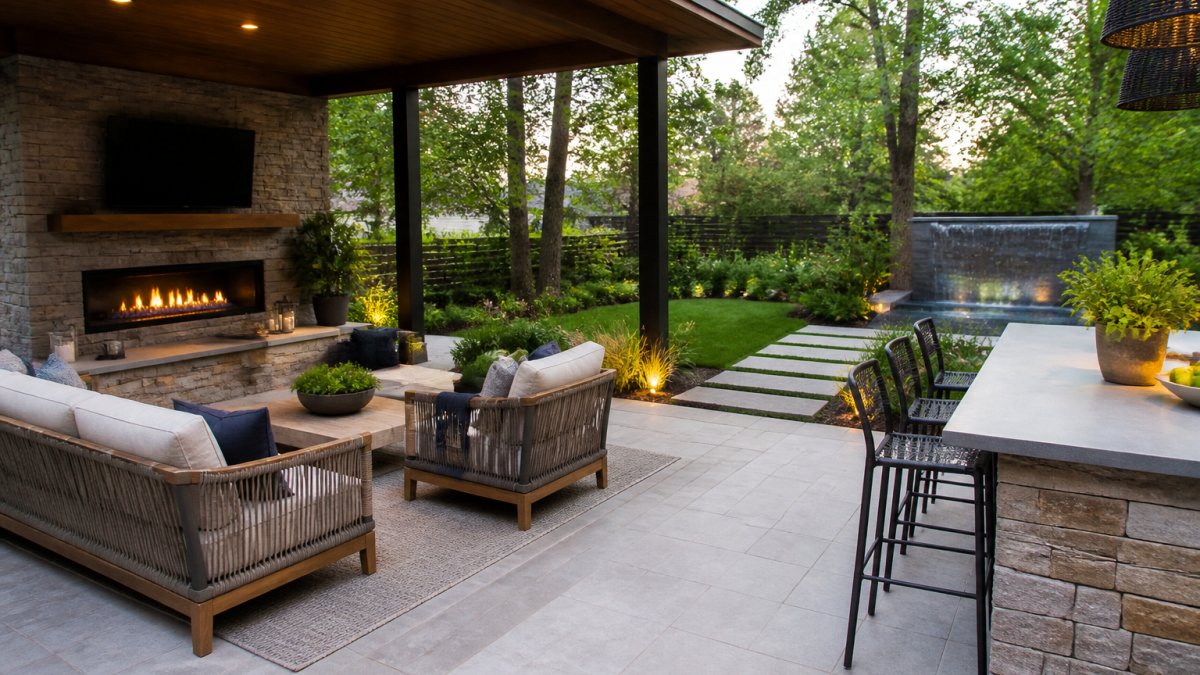
A covered outdoor living space is the single biggest upgrade for year-round usability in Georgia. Shade drops the felt temperature on a hot afternoon, and a roof keeps a sudden rain shower from ending your evening. That means more months of comfortable use, from early spring through late fall, instead of a narrow window in between. A louvered roof gives you adjustable shade and rain protection, while a fixed cover with ceiling fans handles both airflow and weather. For anyone who wants to entertain or just relax outside without checking the forecast, cover is the feature that pays off most.
Using an Outdoor Space Design App to Plan Your Project
An outdoor space design app lets you lay out your patio, furniture, and plantings before you spend a dollar on materials. Most tools let you drop in your yard's dimensions, drag in furniture and features, and see how the layout flows. This matters because moving a fire pit or a seating area on a screen costs nothing, while moving a paver patio after it's built costs plenty. Start by measuring your space and marking sun and shade through the day. Then test two or three layouts. A design app won't replace a site visit for drainage and grading, but it removes the guesswork from the fun part: deciding how your outdoor living area will look and feel.
Climate-Specific Planning for Year-Round Usability
Most design apps stop at layout. The harder question is how your space will perform across all four seasons in your specific climate.
Heat and sun. In hot-summer climates, shade is not optional.
Wind. Coastal and plains areas deal with steady wind that makes umbrellas useless and sends lightweight furniture tumbling.
Rain and snow. In wet climates, drainage and cover matter more than any finish.
Cold and shoulder seasons. If you want to use the space in late fall or early spring, plan for heat at the design stage.
Lighting, Fire Pits, and Comfort Features for Year-Round Use
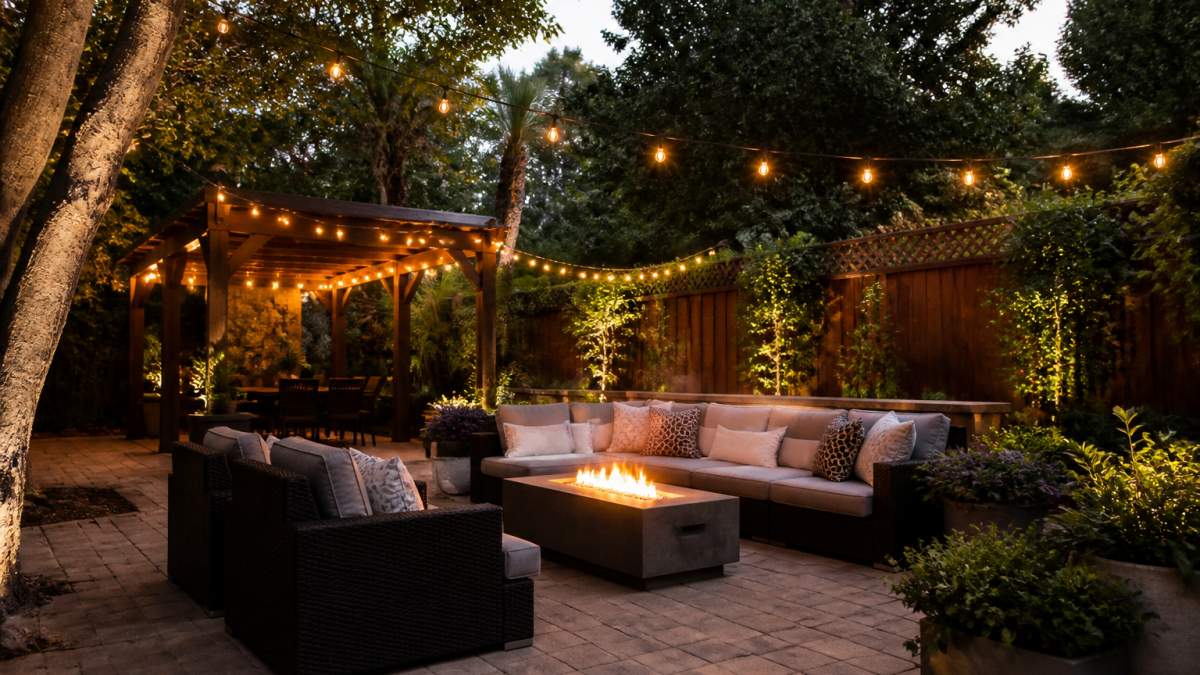
Lighting and heat turn an outdoor living space into one you use after dark and into the cooler months. Landscape lighting does double duty: it makes paths and steps safe and it sets the mood. Warm lighting at low levels beats bright floodlights for ambiance. A fire pit anchors a seating area and extends comfortable evenings well into fall. For deeper cold, patio heaters keep a dining area usable. Comfort features like ceiling fans, shade sails, and weather-resistant furniture cushions round out the space. The goal is a yard that works on a mild spring morning and a crisp October night alike.
Materials, Durability, and Maintenance for Comfort Features
The features themselves are only half the story.
Lighting. Fixtures come in copper, brass, aluminum, and stainless steel. Copper and brass age to a patina and resist corrosion, but cost more upfront.
Fire pits. Wood-burning steel or cast-iron pits give the classic experience but need ash cleanup, spark screens, and a safe distance from structures and overhangs.
Patio heaters. Wall-mounted infrared heaters warm people and objects directly, which suits open patios and windy spots.
Ceiling fans and shade sails. Damp-rated ceiling fans are built for covered outdoor use and keep air moving in humid climates.
Furniture and cushions. Teak, acacia, and eucalyptus weather well with occasional oiling. Powder-coated aluminum and all-weather wicker need less care.
| Feature | Best For | Maintenance Level |
|---|---|---|
| Landscape lighting | Safety and ambiance after dark | Low |
| Fire pit | Fall and winter evenings | Low to medium |
| Patio heaters | Cool-weather dining | Medium |
| Ceiling fans | Airflow under a cover | Low |
| Shade sails | Summer sun control | Medium |
Budget Breakdown and Project Prioritization
A smart outdoor living budget starts with the structure, not the decor. Spend first on what's expensive or hard to change later: grading, drainage, the patio base, and any cover or roof. Then add the features you'll use most, like lighting and a fire pit. Furniture and decor come last, because they're easy to swap and easy to phase in over time. If you're improving curb appeal before a sale, prioritize the elements a buyer actually sees from the street and the front door: a clean, level walkway, tidy landscaping, and a well-kept patio. Pricing depends on the scope, materials, and site conditions, so we recommend a walkthrough and a written quote rather than a guess.
Permits, Safety, and Accessibility Considerations
Permits and safety aren't the exciting part of an outdoor living project, but they're the part that protects your investment. Many permanent structures, including covered patios, decks, and some retaining walls, require a permit, and rules vary by city and county. Check with your local building department before you build, and confirm any HOA requirements as well. On the safety side, keep steps and paths well lit and free of trip hazards, and make sure any fire feature sits a safe distance from structures and overhangs. Accessibility matters too: wide, level paths and gentle ramps let everyone in the household use the space comfortably.
Frequently Asked Questions
What are the current trends in patio design?
Current patio design trends focus on creating functional outdoor rooms with defined zones for dining, lounging, and cooking. Homeowners are requesting covered structures like louvered roofs and pergolas to extend usability across seasons. Mixed materials such as stone pavers with wood accents add visual interest. Built-in seating, outdoor kitchens, and fire features remain popular for entertaining. Landscape lighting that creates ambiance for evening use is another priority. For Georgia homes, choosing materials that handle humidity and temperature swings matters more than chasing every trend.
Is there a free app to design a patio?
Several free outdoor space design apps let you plan a patio layout before committing to construction. These tools typically offer drag-and-drop furniture placement, material selection, and dimension planning. Some provide augmented reality features so you can visualize how a patio would look in your actual yard. Free versions usually cover basic planning, while advanced features like 3D rendering or plant libraries may require a subscription. For complex projects involving drainage, grading, or structural elements, a professional consultation adds value beyond what any app can provide.
How do you plan an outdoor living space?
Start by defining how you want to use the space: dining, relaxing, entertaining, or a combination. Measure your available area and note sun exposure, wind patterns, and drainage. Decide on a layout that separates activity zones. Choose materials suited to your climate, such as pavers that resist freeze-thaw cycles or decking that handles moisture. Plan for lighting, power outlets, and water access early. If your project involves covered structures or significant grading, check local permit requirements before purchasing materials. A professional can help you avoid costly mistakes in the planning phase.
What should an outdoor living space include?
A well-designed outdoor living space typically includes comfortable seating, a dining area, and some form of shade or cover. Lighting extends usability into the evening. A fire pit or heater adds warmth for cooler months. If you enjoy cooking outdoors, an outdoor kitchen or grill station is worth including. Privacy features like screens, hedges, or landscape walls make the space feel enclosed. Storage for cushions and tools keeps the area tidy. For Georgia homeowners, a covered patio or pergola helps manage both summer sun and unexpected rain.
How can you make an outdoor living space comfortable year-round?
Year-round comfort starts with weather protection. A covered outdoor living space with a louvered roof or solid roof blocks rain and provides shade in summer. Add a fire pit, patio heater, or outdoor fireplace for cooler months. Ceiling fans improve air circulation in hot weather. Choosing durable, weather-resistant furniture and fabrics reduces maintenance. In Georgia, where humidity and temperature swings are common, materials like composite decking and treated wood outperform untreated options. Proper drainage prevents standing water that attracts mosquitoes and damages surfaces.
How much does it cost to add an outdoor living space?
Pricing depends on the scope of your project, materials selected, and site conditions. A simple patio with basic furniture costs less than a covered structure with an outdoor kitchen and fire feature. Drainage work, grading, or permit fees add to the total. BV Dub Outdoor Solutions recommends getting a detailed quote based on your specific plans rather than relying on generic estimates. Visit their website for current pricing or to request a consultation. Prioritize the features you will use most and phase additional elements over time.
Do I need a permit to build a covered patio or deck?
Permit requirements vary by location and project scope. In many Georgia municipalities, covered structures, decks above a certain height, and projects involving electrical or plumbing work require permits. Even when a permit is not required, following local building codes ensures safety and prevents issues when selling your home. Check with your local building department before starting construction. A professional installer familiar with your area can guide you through the process and ensure the work meets current standards.
Your yard can do more than it does right now, and the difference often comes down to planning, drainage, and the right features for how you actually live. BV Dub Outdoor Solutions helps LaGrange and Woodland homeowners design, install, and maintain outdoor living spaces built to handle Georgia weather, from patio installation and drainage fixes to routine lawn care and seasonal cleanups. Get started with BV Dub Outdoor Solutions and turn your yard into a space you'll use all year.