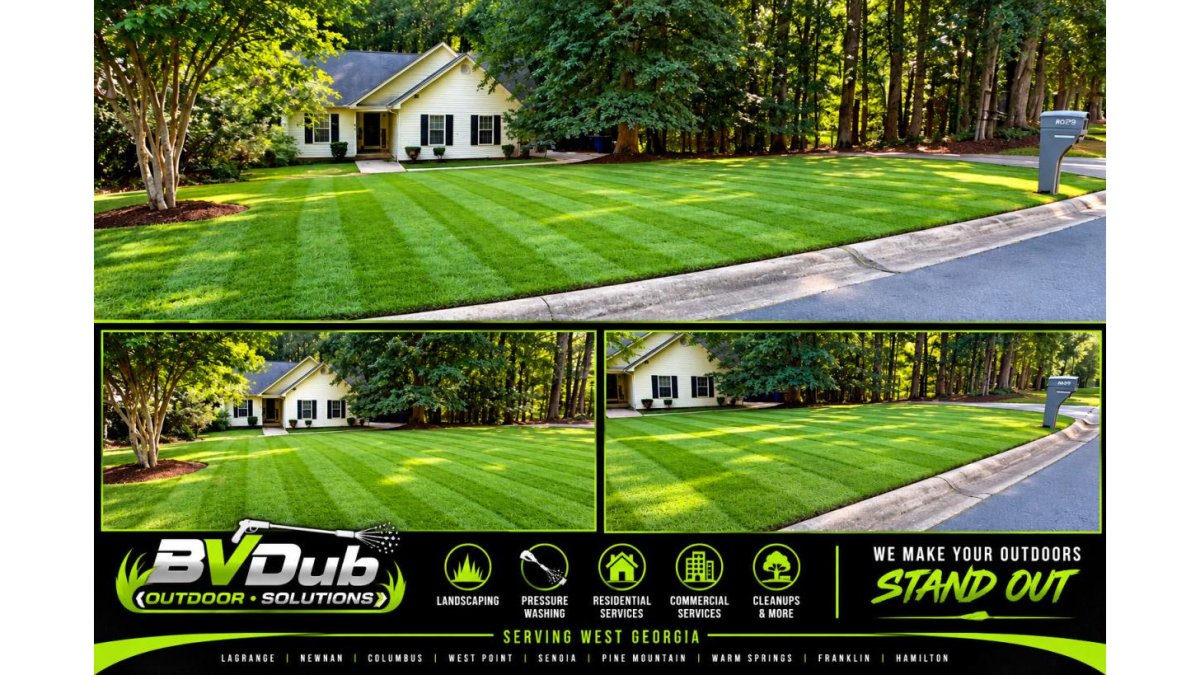
 comparison
Are Professional Lawn Treatment Services Worth It?
Last Updated: November 2, 2026
Quick Summary
Professional lawn treatment services are worth it when they bundle mowing, fertilization, weed control, pest control and seasonal cleanup under one written, dated plan reviewed against your lawn each season. Expect visible improvement over one to two full growing seasons, and ask for the written plan, insurance certificate and applicator license before you sign.
- Never remove more than a third of the blade height in a single mowing pass.
- Pre-emergent herbicides go down late winter to early spring in West Georgia.
- Centipede grass is easily pushed too hard by nitrogen timing.
- Aeration and overseeding are scheduled where compaction or thinning is documented.
- Ask for the certificate of insurance and applicator license number in writing.
Table of Contents
- What Professional Lawn Treatment Services Near Me Actually Cover
- What Full-Service Lawn Care Includes Beyond the Basics
- What a Professional Lawn Treatment Plan Looks Like
- Lawn Treatment Cost: What Drives Your Quote
- Building a Lawn Treatment Schedule That Fits Your Yard
- Questions to Ask a Lawn Care Company Before You Hire
- Requesting a Free Estimate From BV Dub Outdoor Solutions
- Frequently Asked Questions
What Professional Lawn Treatment Services Near Me Actually Cover
Professional lawn treatment services near me is a search homeowners in LaGrange and Woodland run when the mower alone stops keeping up. Most people picture mowing and nothing else. The reality covers three layers: routine maintenance, soil and plant health, and cleanup work that protects the property through seasonal change. Below, we break down what each layer involves and where the real value sits.
Mowing, Edging and Trimming
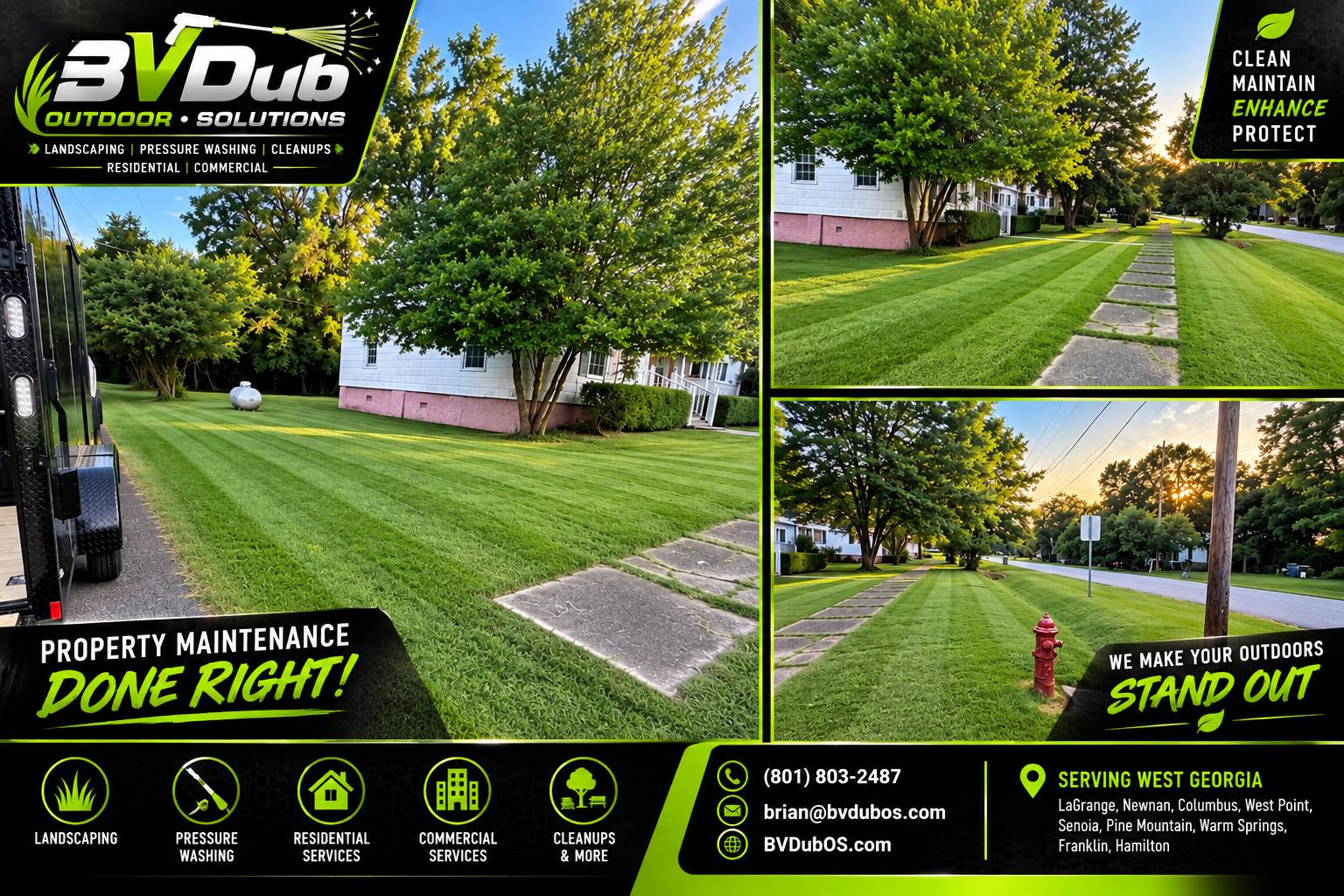
Mowing is the visible layer, and it sets the tone for everything else. A proper cut follows the one-third rule: never remove more than a third of the blade height in a single pass. Cut too short and the grass spends energy recovering instead of thickening. Edging and trimming finish the job by defining beds, walkways and fence lines. These are the details that separate a maintained yard from a mowed one, and they are the first thing a visitor notices.
Fertilization, Weed Control and Pest Control
Fertilization feeds the lawn on a schedule matched to grass type and season. Weed control handles the plants competing with your grass, and it works best when applied before weeds seed. Pest control covers grubs and surface insects that quietly destroy root systems. A common mistake is treating these as separate errands. They work as a sequence, and the timing of one affects the results of the next.
What Full-Service Lawn Care Includes Beyond the Basics
Full-service lawn care bundles maintenance, treatment and seasonal work under one provider instead of three. The residential lawn care services worth paying for usually combine mowing, edging, fertilization, weed control, seasonal cleanup and mulch.
What a Professional Lawn Treatment Plan Looks Like
A professional lawn treatment plan is a written, dated schedule of what gets applied, when, and why, reviewed against your lawn's condition each season. It is not a generic calendar copied from a franchise binder.
Lawn treatment plans are often built around application categories such as the following:
- Pre-emergent herbicides applied when soil temperatures approach the germination threshold for target weeds, typically late winter to early spring in West Georgia for warm-season grasses. Timing matters more than product choice; a pre-emergent applied after weeds have emerged does almost nothing.
- Post-emergent herbicides used as spot or blanket treatments once weeds are actively growing. Selective formulations protect the desired grass; non-selective products are reserved for bed lines and hardscape edges.
- Granular or liquid fertilization split across the growing season rather than delivered in one heavy dose. Warm-season grasses such as Bermuda, Zoysia, and centipede respond differently to nitrogen timing, and centipede in particular is easily pushed too hard.
- Aeration and overseeding scheduled where compaction or thinning is documented, usually in early fall for cool-season overseeding and late spring to early summer for warm-season aeration depending on the species.
A plan should also state what the provider will not do, and should set a review point where the schedule is adjusted based on how the lawn responded. If you want to understand the timing logic behind fertilizer windows, our guide on when to apply lawn fertilizer explains how seasonal windows shift by grass type.
Realistic Treatment Outcomes and Timelines
Homeowners often expect a single application to fix a lawn. A more realistic pattern is that pre-emergent and fertilization programs show visible improvement over one to two full growing seasons, while severe weed infestations or compacted soil may need aeration, reseeding, or a second year of corrective applications. Results depend on watering, mowing height, shade, and weather, factors no provider controls. A good plan sets those expectations up front.
Seasonal Cleanup and Mulch Installation
Cleanup clears leaves, debris and dead growth so the lawn can breathe going into dormancy. Mulch installation follows, holding moisture, suppressing weeds and finishing bed lines. These two tasks are where curb appeal is won or lost, and they are the tasks busy homeowners most often skip. Skipping them rarely shows up immediately. It shows up next spring, as thinning grass and weed pressure.
Here are the application categories a professional plan is typically built around, with the timing the article gives for each.
| Application | When it is applied | Key note |
|---|---|---|
| Pre-emergent herbicides | Late winter to early spring in West Georgia | Timing matters more than product choice |
| Post-emergent herbicides | Once weeds are actively growing | Selective formulations protect desired grass |
| Granular or liquid fertilization | Split across the growing season | Centipede is easily pushed too hard |
| Aeration and overseeding | Early fall for cool-season; late spring to early summer for warm-season | Scheduled where compaction or thinning is documented |
Lawn Treatment Cost: What Drives Your Quote
Lawn treatment cost depends on yard size, grass type, treatment frequency, property access and how much corrective work the lawn needs at the start. A lawn in poor condition needs more visits in year one than a lawn already on a maintenance schedule. Quotes can vary because providers price different scopes. Ask what is included per visit and how many visits the plan covers. For a fuller breakdown of the factors behind a quote, see our lawn care cost pricing guide. Request a free estimate so the number reflects your actual property.
Building a Lawn Treatment Schedule That Fits Your Yard
The right lawn treatment schedule follows your grass, your climate and your calendar, not a generic template. In West Georgia, warm-season grasses push growth hard through summer and slow in winter, so fertilization, weed control and mowing frequency all shift with the season. A practical schedule covers:
- Spring: pre-emergent weed control, first fertilization, cleanup of winter debris
- Summer: mowing on a consistent interval, insect checks, spot weed treatment
- Fall: aeration where needed, fall fertilization, leaf cleanup
- Winter: bed maintenance, mulch refresh, equipment and irrigation checks
The schedule should flex when weather does. A dry stretch changes mowing intervals. A wet one changes disease pressure. Providers who lock a plan and never revisit it are the ones whose results fade by mid-season.
Questions to Ask a Lawn Care Company Before You Hire
The questions you ask before hiring predict the service you get. Start with scope: does the company handle mowing, weeds, fertilization, drainage and pest issues, or will you need to coordinate several vendors? Then ask about communication. If there is a problem with your yard, who tells you, and how fast? Ask how they handle a missed visit and what happens if the work does not match what was agreed. These answers reveal more than any brochure. Our guide on how to choose a reliable landscaper walks through quotes, references and contract checks in detail.
Credentials, Insurance and Licensing
Credentials, insurance and licensing are the part homeowners skip, and they are the part that protects you. Ask whether the company carries liability insurance and workers' compensation coverage, and request proof rather than a verbal yes. Confirm the crew is employed or properly contracted, not an unvetted day laborer. Check customer ratings and community reviews, and ask for references from properties similar to yours. A provider who hesitates on any of these is telling you something.
Go one step further and ask specifically:
- Who applies the product? Applications of pesticides or fertilizers may require a licensed applicator or certified technician, depending on local rules. Ask for the license or certification number and confirm it is current.
- What is the insurance limit, and can I see a certificate of insurance? A certificate naming the property owner as certificate holder is standard practice for legitimate operators.
- What is the re-entry interval after treatment? Products differ. Ask how long pets and children should stay off the lawn, and whether the provider posts signage after application.
- How do you prevent runoff and protect nearby water? Ask about application methods near storm drains, creeks, and wellheads, and whether the provider avoids applying before heavy rain.
- Are lower-impact options available? Some providers offer organic or reduced-risk programs. Ask what the trade-offs are in efficacy and cost rather than assuming either option is universally better.
Treatment Safety and Environmental Practices
Safety questions belong in the hiring conversation, not after the first application. Ask what products are used, how they are stored and handled on site, and what the provider does if a pet or child enters a treated area early. Reputable operators follow label directions, keep application records, and will explain re-entry guidance in plain language. If a provider cannot answer basic safety questions, treat that as a disqualifier rather than a minor gap.
Requesting a Free Estimate From BV Dub Outdoor Solutions
A free estimate should tell you exactly what you are paying for, visit by visit, with no vague line items. BV Dub Outdoor Solutions provides professional outdoor services for properties in the LaGrange and Woodland, Georgia area and in other nearby communities. If you are ready to stop chasing three vendors and start with one clear schedule, contact BV Dub Outdoor Solutions for current prices or a quote.
Frequently Asked Questions
How much does lawn treatment cost?
Lawn treatment cost depends on your yard size, acreage, lawn condition, how many treatments you need and whether you add services like mulch installation or pest control. Quotes vary widely between providers because each bundles different services. The reliable way to compare is to request a free estimate with the same scope from each company and check what is included, not just the headline price.
What is included in full-service lawn care?
Full-service lawn care usually covers lawn mowing, edging and trimming, fertilization, weed control, insect and pest control, seasonal cleanup and mulch installation. Some providers add aeration, overseeding, irrigation checks and snow removal in winter. The key question is whether one company handles everything or subcontracts parts.
How often should a lawn be treated by professionals?
The number of visits depends on grass type, soil condition and how much weed or insect pressure your yard sees. Mowing runs weekly or bimonthly through the growing season. Ask a provider to walk your property and build the schedule around what your lawn actually needs rather than selling a fixed package.
What questions should I ask before hiring a lawn care company?
Ask whether the company is fully insured and licensed, how many years of experience it has, and whether it uses its own crew or subcontractors. Request a written scope covering mowing, fertilization, weed control and cleanup, plus what happens if a visit is missed. Ask how it communicates problems and what guarantee applies if work does not meet the agreed standard. Also ask for local customer ratings and whether it serves your specific address, since service area boundaries vary.
How long does it take to see results from lawn treatments?
Results depend on lawn condition at the start, watering habits and soil quality. A provider should set realistic expectations at the estimate stage and explain what you will see after each visit rather than promising overnight change.
The hardest part of lawn care is not knowing what to do. It is keeping the schedule consistent through a Georgia summer when work and life get busy. That is the gap BV Dub Outdoor Solutions fills, with routine lawn maintenance, treatment programs and commercial property care built around your property's actual condition. Get started with BV Dub Outdoor Solutions and put your yard on a schedule that holds up all season.