 blog
5 Ways to Improve Lawn Health for a Greener Yard
Last Updated: October 25, 2026
Quick Summary
Improving lawn health comes down to five steps: test and fix your soil first, fertilize when your grass is actively growing, water deeply and infrequently in the early morning, mow at the right height for your grass type, and overseed thin areas. Lawn health is the overall condition of your grass, measured by root depth, density, color, and how well it handles heat, drought, and foot traffic.
- Run a soil test before buying fertilizer so you know your pH and nutrient levels.
- Water between 4 and 9 a.m. to reduce evaporation and prevent disease.
- Never remove more than one-third of the blade height in a single cut.
- Overseed when your grass type is entering its active growth season.
- Fix drainage with aeration, grading, French drains, or downspout extensions.
Table of Contents
- Why Lawn Health Starts Below the Surface
- 1. Test and Improve Your Soil First
- 2. Know When to Apply Lawn Fertilizer
- 3. Get Watering Right: How Often to Water a Lawn
- 4. Mow for Density, Not Just Height
- 5. How to Overseed an Existing Lawn
- Lawn Drainage Solutions for Standing Water
- Diagnosing Common Lawn Problems Before They Spread
- Frequently Asked Questions
Why Lawn Health Starts Below the Surface
A thick, green lawn is not grown from the top down. It is built from the soil up.
Most homeowners focus on what they can see: the blades. The real work happens out of sight.
So here is the plan. We will walk through soil testing, fertilizer timing, watering, mowing, and overseeding.
1. Test and Improve Your Soil First
Start with a soil test before you buy a single bag of fertilizer. A soil test is a lab analysis of your soil's pH and nutrient levels, and it tells you exactly what your lawn is missing. Without it, you are guessing.
What a Soil Test Tells You
A basic test reports three things that matter most:
- pH level: how acidic or alkaline your soil is
- Nutrients: phosphorus, potassium, and sometimes nitrogen
- Organic matter: the material that feeds soil life
Georgia soils tend to run acidic, so lime is often needed to raise pH. Your local extension office can run a test for a small fee and give you a report with exact application rates.
Fixing pH and Organic Matter
Apply lime or sulfur based on the test results, not on a hunch. Then add organic matter. Compost and aged manure improve soil structure, helping sandy soil hold water and clay soil drain better.
A common mistake is skipping the test and dumping on fertilizer. That wastes money and can push nutrient levels too high.
2. Know When to Apply Lawn Fertilizer
Timing matters more than the brand on the bag. The best time to apply lawn fertilizer is when your grass is actively growing, so it can take up nutrients instead of losing them to runoff. But "active growth" means different calendars for different grasses, and the form of nitrogen you choose matters as much as the date.
Why Timing Controls Results
Grass only absorbs nitrogen through actively growing roots. Apply when the plant is dormant and the nitrogen sits in the soil, where it either leaches below the root zone or washes into storm drains. Apply too late in fall to a warm-season grass and you push tender new growth that the first frost kills.
Warm-Season Grasses: Bermuda, Zoysia, St. Augustine, Centipede
These grasses green up in late spring and grow hardest from late spring through summer. Feed them in that window.
- First feeding: after full green-up, once the lawn has been mowed two or three times, usually late spring.
- Mid-season feeding: midsummer, only if the lawn is actively growing and irrigated.
- Late-season feeding: avoid. Nitrogen applied within roughly six weeks of the first expected frost pushes growth the plant cannot harden off.
Cool-Season Grasses: Tall Fescue and Kentucky Bluegrass
These grasses do most of their growing in spring and fall, with fall being the more important feeding window because it builds root reserves for summer.
- Fall feeding: the heaviest application, timed while the grass is still growing but after summer heat has broken.
- Late-fall feeding: a smaller application can help the lawn store nutrients through winter, depending on your extension guidance.
- Spring feeding: light. Heavy spring nitrogen on fescue pushes top growth at the expense of roots and worsens summer stress.
Slow-Release vs. Quick-Release Nitrogen
- Slow-release (controlled-release) nitrogen releases over weeks, feeding steadily and reducing the burn and runoff risk of a single heavy dose. It costs more per bag but usually delivers more usable nitrogen per dollar because less is lost.
- Quick-release nitrogen greens the lawn fast but is easy to overapply and washes away in rain. It is best used in small, split applications when you need a quick response.
A practical rule: split your seasonal nitrogen total across two or three applications rather than one heavy dose. More small feedings match how grass actually takes up nutrients and cut the risk of runoff.
Application Rules That Prevent Waste
- Follow the soil test. If phosphorus and potassium are already adequate, buy a nitrogen-only or low-phosphorus product. Extra phosphorus does not help established lawns and is a runoff concern.
- Do not fertilize before heavy rain. Check the forecast; nitrogen applied ahead of a downpour ends up in storm drains.
- Sweep fertilizer off hard surfaces back onto the lawn so it does not wash into gutters.
For a deeper breakdown by grass type and season, see our guide on when to apply lawn fertilizer. It covers the timing windows for Georgia lawns in detail.
3. Get Watering Right: How Often to Water a Lawn
Deep, infrequent watering beats light daily sprinkling every time. The right way to water a lawn is to soak the soil to a depth of about 15 centimeters once or twice a week, then let the top layer dry out before watering again.
Early-Morning Watering and Deep Soaks
Water between 4 and 9 a.m. Early-morning watering reduces water evaporation and gives blades time to dry before nightfall, which helps prevent disease.
A few rules that make a real difference:
- Water deeply, not often. Shallow watering trains roots to stay near the surface.
- Check soil moisture with a screwdriver. If it slides in easily, you can wait.
- Skip watering if rain is coming.
Drought resilience comes from deep roots, and deep roots come from deep watering. That is the whole trick.
4. Mow for Density, Not Just Height
Mowing is not just tidying up. It is a growth tool. Cut too short and you scalp the lawn, weaken roots, and open the door to weeds. Cut at the right height for your grass and you shade the soil, crowd out weeds, and push the plant to tiller, the mechanism that turns a thin lawn into a dense one.
The One-Third Rule and Why It Works
Never remove more than one-third of the blade height in a single cut. Grass stores energy in the blade, and removing too much at once forces the plant to draw on root reserves to regrow, which thins the turf over time. The one-third rule keeps the plant in a growth mode rather than a recovery mode.
Mowing Heights by Grass Type
Mowing height is not one number. It is a range set by the grass species and the season.
- Bermuda: roughly 1 to 1.5 inches for a manicured lawn; higher in shade or under stress.
- Zoysia: roughly 1.5 to 2.5 inches, depending on the cultivar.
- St. Augustine: roughly 3 to 4 inches. It does not tolerate close mowing and thins if cut too short.
Treat these as starting ranges and adjust for shade, heat, and traffic. In shade, mow at the higher end of the range, more blade area captures the limited light.
How Height Affects Roots and Weeds
The relationship is direct: taller blades support deeper roots, and deeper roots survive drought and heat. Cutting too short does the opposite, it shrinks the root system, thins the canopy, and lets sunlight reach the soil surface, which is exactly what weed seeds need to germinate. A dense, taller canopy is one of the cheapest weed-prevention tools you have.
Mowing Frequency Math
Frequency follows the one-third rule. If your grass is growing fast in spring, that may mean mowing every five to seven days. In summer heat or dormancy, stretch to every ten to fourteen days. The test is simple: if you would remove more than one-third of the blade, you waited too long.
Seasonal Adjustments
- Spring flush: mow more often to keep up with rapid growth.
- Summer heat: raise the deck one notch on cool-season grasses to shade the soil and reduce stress.
- Fall: keep mowing cool-season grasses at the higher end while they build root reserves.
Blade Sharpness and Clipping Management
Sharp mower blades matter too. Dull blades tear grass instead of cutting it, leaving ragged tips that brown and invite disease.
Leave clippings on the lawn unless they are clumping.
For a full mowing schedule and the one-third rule explained in detail, read our guide on how often you should mow your lawn.
5. How to Overseed an Existing Lawn
Overseeding is spreading new grass seed over an existing lawn to fill thin spots and crowd out weeds.
How to overseed an existing lawn, step by step:
- Mow low and bag the clippings to improve seed-to-soil contact.
- Aerate or dethatch to open the surface.
- Choose seed matched to your grass type and sun exposure.
- Spread seed evenly with a spreader.
- Lightly rake or top-dress with compost.
- Water lightly and often until germination.
Keep foot traffic off the new seed for the first few weeks. If you are starting fresh or repairing a lot of damage, our complete new lawn care guide pairs well with this step.
Lawn Drainage Solutions for Standing Water

Standing water is a lawn killer. It drowns roots, breeds fungus, and turns bare spots into mud. Fixing drainage is one of the highest-value steps you can take.
Common lawn drainage solutions include:
- Aeration: opens compacted soil so water soaks in
- Grading: reshaping the surface so water flows away from the house
- French drains: buried trenches that carry water off-site
Diagnose first. Find where the water pools and where it comes from. For a full walkthrough, see our step-by-step drainage guide.
Diagnosing Common Lawn Problems Before They Spread
Catching problems early saves money and grass. Walk your lawn weekly and look for these signs:
| Symptom | Likely Cause | First Fix |
|---|---|---|
| Yellow patches in sun | Drought stress or grubs | Check soil moisture, then roots |
| Brown circles that spread | Fungal disease | Improve airflow, reduce evening water |
| Thin, patchy turf | Poor soil or shade | Soil test and overseed |
| Weeds taking over | Weak, thin grass | Fix fertility and mowing height |
| Standing water | Poor drainage | Aerate and regrade |
Pest and disease problems usually follow stress. Fix the soil, water, and mowing first, and most issues shrink on their own.
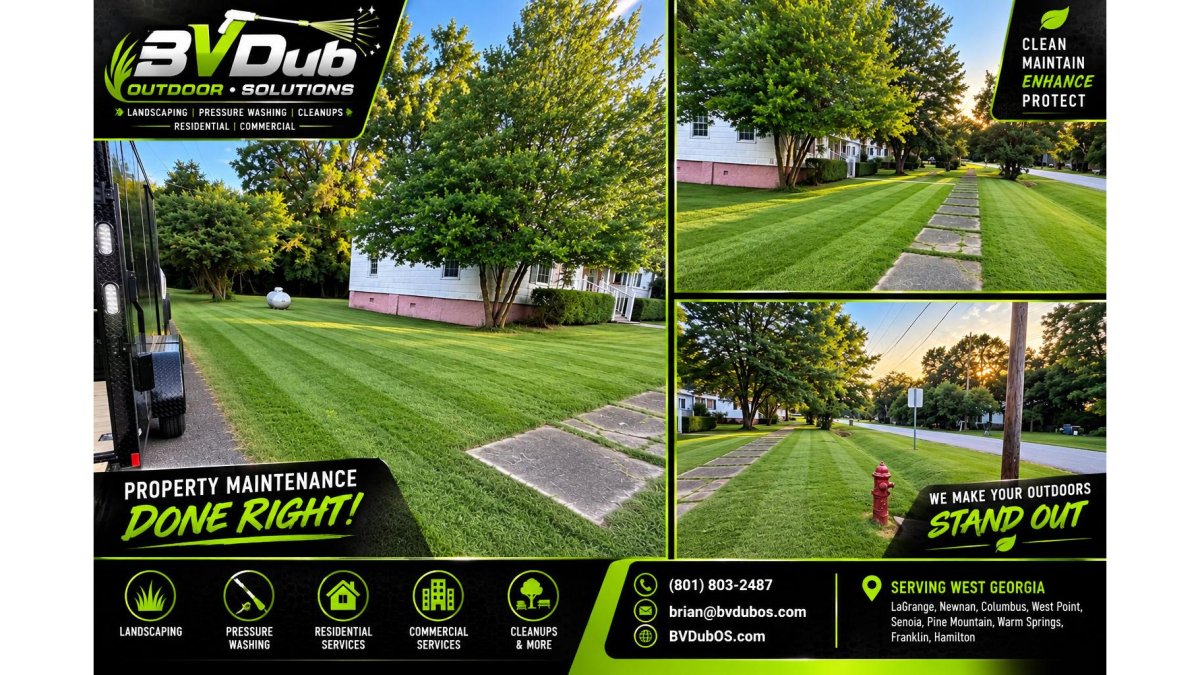
If your lawn needs more than you can handle, BV Dub Outdoor Solutions provides routine mowing and maintenance for properties across the LaGrange area. You can request local lawn mowing service.
Frequently Asked Questions
How can I improve my lawn health quickly?
Start with a soil test, then fix the two biggest limiting factors: water and fertility. Water deeply once or twice a week instead of light daily sprinkling, and apply fertilizer at the right time for your grass type. Sharpen your mower blades so grass is cut cleanly rather than torn. These three changes often show visible improvement in lawn quality within four to six weeks, though full recovery of a thin lawn takes a full growing season.
When should I fertilize my lawn for the best results?
Timing depends on grass type. Warm-season grasses like Bermuda and Zoysia benefit most from fertilizer in late spring through summer, when they are actively growing. Cool-season grasses do best with feeding in early fall and again in spring. Avoid fertilizing during drought stress or right before heavy rain, since nitrogen washes away and can end up in storm drains. A soil test takes the guesswork out of the proper amount.
How often should I water my lawn to keep it healthy?
Most lawns need about 2.5 to 4 centimetres of water per week, including rainfall. Water deeply once or twice a week rather than daily, which encourages deeper roots and better drought resilience. Early-morning watering limits water evaporation and reduces disease pressure compared with evening watering. If you see runoff, split the watering into two shorter cycles so moisture soaks in instead of running off.
Can I just throw grass seed down on an existing lawn?
You can, but results are unreliable without preparation. Overseeding works best when you mow low, loosen the top layer of soil, and keep the seed consistently moist for the first two to three weeks. Seed that sits on top of thick thatch or dry soil rarely germinates. Match the seed to your sunlight and shade conditions, and overseed in the season your grass type establishes fastest for the best chance of a thicker, greener lawn.
Your lawn can look better this season, but it needs a plan and steady follow-through. BV Dub Outdoor Solutions handles the whole job: routine mowing, weed control, drainage fixes, and seasonal cleanups, with reliable communication so you always know what is happening on your property. Get started with BV Dub Outdoor Solutions and build a greener, healthier yard without the guesswork.